Gas at $5 in 2026? Shocking Impact of Middle East Tensions on American Wallets
Why what happens in the Strait of Hormuz and Bab el-Mandeb could determine how much you pay for gas, groceries, and everything else.
Maritime chokepoints impact US economy in ways most Americans never see coming. Imagine waking up tomorrow to find gas at $5.50 a gallon. Your weekly grocery bill jumped 20%. That new car you’ve been eyeing? It just got thousands more expensive. You’d check local news for an explanation, but the real reason might be happening 7,000 miles away.
The world’s most critical maritime chokepoints—narrow passages where global trade funnels—are now at the center of escalating tensions between Iran, Israel, and proxy groups across the Middle East. For American families, this isn’t just a foreign policy issue. It’s a direct line to your wallet.
How Maritime Chokepoints Impact US Economy: The Basics
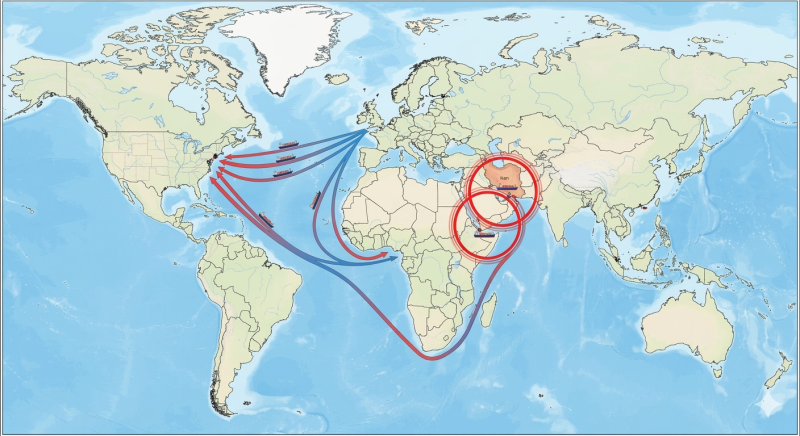
Think of the global economy as a human body. If a major artery gets blocked, the whole body suffers. The Strait of Hormuz and the Bab el-Mandeb Strait are two of the largest arteries in the world. They aren’t just lines on a map; they are the physical pathways for the energy and goods that power American life.
🏭 Strait of Hormuz
Located between Iran and Oman, this is the world’s most important oil passage. Nearly 20% of global oil consumption flows through here daily. That’s about 21 million barrels of crude. Any disruption here doesn’t stay in the Middle East—it shows up at your local pump within weeks.
🚢 Bab el-Mandeb Strait
This is the southern gateway to the Suez Canal, through which 12% of global trade passes. If ships can’t safely transit here (as seen with past Houthi attacks), they are forced around the Cape of Good Hope, adding 10-14 days and millions in fuel costs to every journey.
The Tinderbox: What’s Happening Right Now
The recent cycle of strikes between Iran and Israel, coupled with ongoing instability in Yemen, has put these chokepoints directly in the crosshairs. Iran has repeatedly threatened to close the Strait of Hormuz in response to military or economic pressure. Meanwhile, militia groups near Bab el-Mandeb have the proven capability to harass commercial shipping.
This isn’t hypothetical. Insurance premiums for vessels in these regions have skyrocketed. Some shipping companies are already rerouting, creating a hidden tax on everything that moves across the ocean.
The Staggering Cost of Disruption
Let’s put this in terms that matter to an American household. These aren’t abstract figures; they’re the mechanics of inflation.
Understanding how maritime chokepoints impact US economy requires looking at the numbers behind the headlines.
That’s the estimated economic impact if the strait becomes unstable, according to shipping analysts. This cost is passed down through higher prices for European goods, Asian electronics, and global commodities.
A prolonged closure of Hormuz could send oil prices to record highs. Every 10% increase in oil prices adds roughly 0.2% to core inflation and costs the average American driver about 15-25 cents more per gallon.
Real Americans Feeling the Pinch
Mark from Ohio: “My Commute Just Got $80 More Expensive”
Mark, a 45-year-old sales representative from Columbus, drives 120 miles daily for work. “Last month, I was paying $3.80 a gallon. Now I’m at $4.60. That’s an extra $80 a month out of my pocket. My company doesn’t reimburse for fuel, so it’s coming straight from my kids’ activity budget.”
Jennifer from Texas: “Groceries Are Breaking the Bank”
Jennifer, a mother of three in Houston, has watched her grocery bill climb steadily. “Milk, bread, eggs—everything is up. The cashier told me it’s because of shipping costs. I don’t care about geopolitics; I care about feeding my family.”
Three Ways Maritime Chokepoints Impact US Economy and Your Wallet
1. At the Pump
The US is now a major oil exporter, but oil is a global commodity. If Hormuz is disrupted, Asian and European buyers bid up the price of the oil that isn’t blocked, raising the global benchmark (Brent crude). American gas prices, which are tied to global markets, follow suit immediately.
2. At the Grocery Store
The US imports a significant amount of produce (fruits, vegetables, coffee) and goods. Longer shipping routes mean produce spoils or incurs higher “cold chain” energy costs. The USDA notes that transportation can account for up to 10-15% of food costs. A 25% increase in shipping rates translates directly to higher prices on shelf.
3. In Your Savings
Inflation driven by supply shocks (like blocked trade routes) is the hardest type to fight. The Fed’s main tool is raising interest rates, which cools the economy but also reduces the value of investment portfolios and increases the cost of borrowing. Your 401(k) and your ability to buy a home are on the line.
Plan Your Finances with Our Free Tools
Use these calculators to see how rising costs affect your specific situation:
Verified Sources & Further Reading
Frequently Asked Questions
How quickly would a Hormuz closure affect US gas prices?
Within 2-3 weeks. Oil is traded on global markets, and prices adjust immediately based on futures contracts. You’d see the impact at the pump on your next fill-up.
Does the US really rely on these chokepoints?
Indirectly, yes. While the US produces its own oil, global prices are set by supply and demand worldwide. A disruption anywhere affects prices everywhere.
What can I do to protect my budget?
Consider locking in fixed rates on loans, building an emergency fund, and using our Loan Affordability Calculator to stress-test your budget against higher prices.
Are there alternatives to these shipping routes?
Yes, but they’re longer and more expensive. The Cape of Good Hope adds weeks to shipping times and significantly increases fuel costs.
How long could a disruption last?
Historically, tensions can last months. The 2021 Suez Canal blockage took just days to clear but disrupted trade for weeks afterward.
It is clear that the way maritime chokepoints impact US economy is a complex issue. By understanding how maritime chokepoints impact US economy, citizens can better prepare for future price spikes. Our goal is to keep you informed on how maritime chokepoints impact US economy throughout 2026.
So, What Does This Mean for You?
The world is more connected than ever. A rocket fired near a strait 7,000 miles away can, and will, influence your monthly budget. The era of “cheap and predictable” global trade may be facing its biggest stress test.
For the average American, this means expecting more volatility. Gas prices may swing wildly. Grocery bills could see unexpected spikes. And the dream of lower interest rates might be delayed by forces far beyond our borders.
Understanding how maritime chokepoints impact US economy is the first step to protecting your financial future.
Maritime chokepoints impact US economy in ways that touch every American family. Stay informed and plan ahead.
Plan for uncertainty
Use our free calculators to see how higher prices and rates affect your loans and savings.
Try the Loan Affordability Calculator →Disclaimer: This article is for informational purposes only and does not constitute financial, legal, or tax advice. Loan Logic Tool provides educational calculators and guides. Always consult a qualified professional for personalized financial advice.
Sources: U.S. Energy Information Administration (eia.gov), Federal Reserve, Council on Foreign Relations, Bureau of Labor Statistics.
1 thought on “Could Gas Hit $5 in 2026? How Middle East Tensions Threaten American Wallets”