
Published: March 19, 2026 | By Loan Logic Tool Financial Team
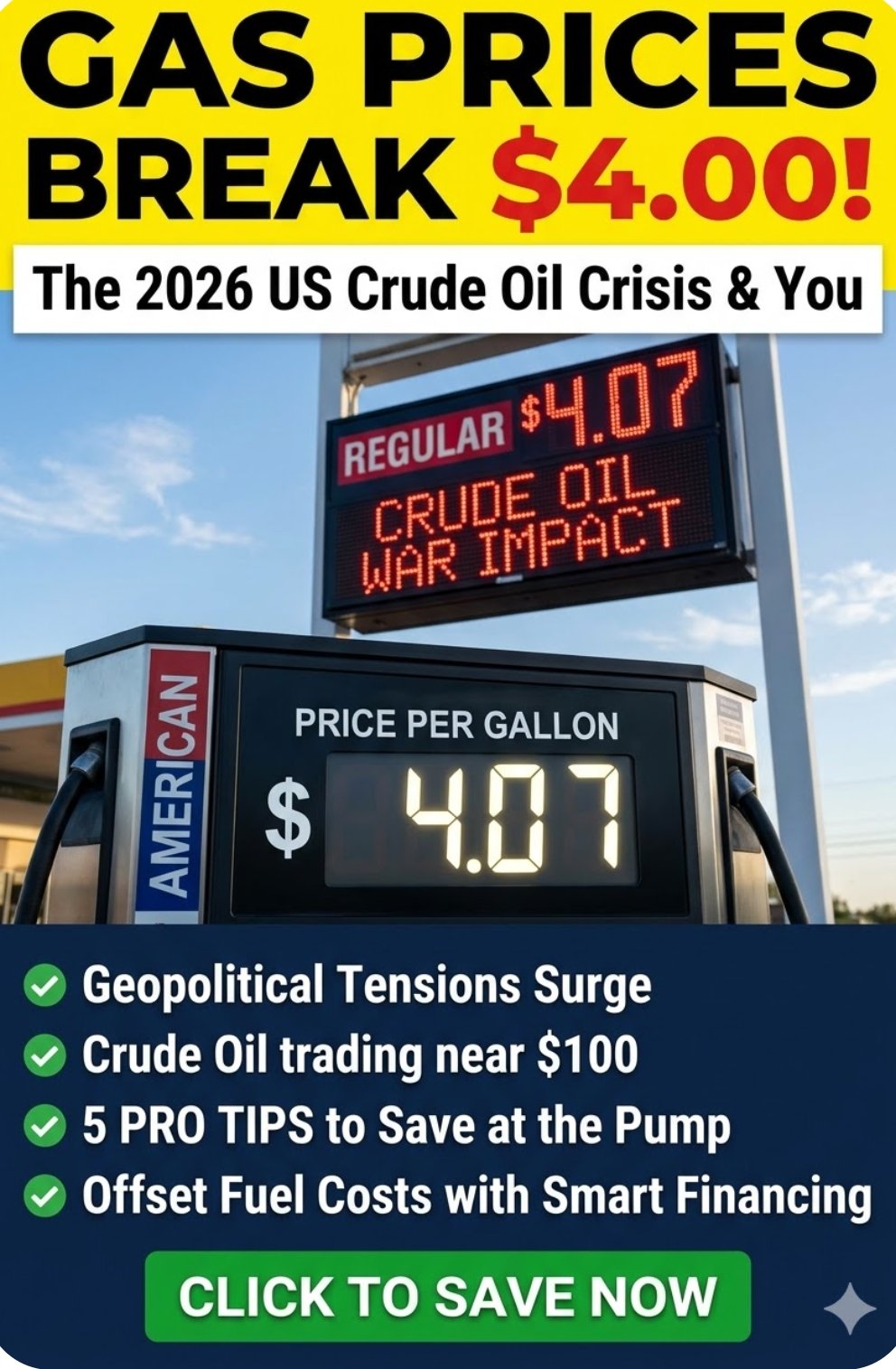
The alarming rise of US gas prices 2026 has become the dominant financial concern for American families this spring. The American landscape is facing a perfect economic storm in early 2026. After a period of relative stability, a combination of intensified geopolitical conflicts and strained global production capacities has sent shockwaves through the crude oil market. This week, the United States has seen its national average gasoline price officially surge past the $4.00 per gallon mark—a psychological and financial threshold that hasn’t been challenged with this intensity in years. The trajectory of US gas prices 2026 is now a critical variable in every household budget.
For millions of American households and small business owners, this isn’t just a headline; it’s a direct hit to the monthly budget. With inflation remaining sticky and the Federal Reserve maintaining high interest rates, the added pressure at the pump is forcing many to rethink their daily commutes and long-term financial commitments. Understanding US gas prices 2026 trends is essential for survival in this volatile economy.
Why Crude Oil Hit $100 Per Barrel This Week: The Driver Behind US Gas Prices 2026
The primary driver behind this sudden spike in US gas prices 2026 is the escalating tension in major oil-producing regions, leading to supply chain disruptions that have reduced global inventories to record lows. According to the U.S. Energy Information Administration, crude oil inventories are at their lowest point in decades. Market analysts in New York and London report that crude oil is now trading near $100 per barrel, and unfortunately, the cost is being passed directly to the consumer, pushing US gas prices 2026 ever higher.
In 2026, the refining process has also become more expensive due to new environmental regulations and higher operational costs. This means that even if crude prices stabilize, the “price at the pump” may remain stubbornly high for the foreseeable future. For a family driving a standard SUV, a full tank now costs nearly $25 more than it did just twelve months ago, a direct consequence of elevated US gas prices 2026.
The Economic “Ripple Effect” of High US Gas Prices 2026
When gasoline prices exceed $4, the impact is felt far beyond the gas station. We are seeing a significant “ripple effect” across the 2026 American economy, driven by sustained high US gas prices 2026. Transportation costs are integrated into almost every product and service we consume. From the grocery store to your doorstep delivery, the surge in crude oil prices is effectively acting as an unofficial tax on every household. The Bureau of Labor Statistics confirms that energy costs are a primary driver of core inflation, directly linked to US gas prices 2026.
Market analysts in the second quarter of 2026 are pointing toward a structural shift in how energy is priced. Unlike previous spikes that were temporary, the current high-interest-rate environment combined with localized conflicts has made refining and transporting fuel more expensive than ever. For the average American family, this translates to an extra $50 to $100 per month in transportation costs alone, all due to persistent US gas prices 2026.
- Grocery Inflation: Higher freight and logistics costs mean higher prices for fresh produce and household staples across all states, exacerbated by climbing US gas prices 2026.
- Logistics Impact: Major e-commerce platforms have already announced a 15% surcharge on long-distance deliveries to offset fuel hikes linked to US gas prices 2026.
- Vehicle Market Shift: There is a massive surge in demand for fuel-efficient vehicles, while the resale value of gas-heavy trucks is beginning to fluctuate as consumers react to US gas prices 2026.
📊 Financial Optimization Strategy: Refinance to Combat High US Gas Prices 2026
In a high-inflation environment driven by soaring US gas prices 2026, managing your major monthly debts is the most effective way to offset rising energy costs. If you are struggling with $4 gas prices, checking your current auto loan rate is a strategic move. Many Americans are currently overpaying on their car notes with rates that are higher than the 2026 market average.
Action Step: Use our professional Auto Loan Calculator to see if refinancing your vehicle can save you enough monthly to cover your entire yearly gas bill increase. This is a critical tool for navigating US gas prices 2026.
“The 2026 oil landscape requires a shift in consumer behavior. We are seeing a massive move toward total financial optimization to offset energy inflation and maintain purchasing power, especially given the trajectory of US gas prices 2026.” – Global Energy Report 2026
5 Strategic Ways to Offset Rising Fuel Costs from US Gas Prices 2026
While we cannot control global crude oil prices, we can control how we manage our financial exposure in the US market. Here are five actionable strategies for the American consumer to protect their wallet in March 2026 against the backdrop of high US gas prices 2026:
- Leverage Digital Loyalty Programs: In 2026, major gas stations like Shell, Exxon, and BP have expanded their digital rewards programs. By using specific station-specific apps or loyalty cards, you can often save between 15 and 30 cents per gallon—savings that add up to hundreds of dollars annually for heavy commuters feeling the pinch of US gas prices 2026.
- Refinance High-Interest Auto Loans: If you are paying a high APR on your vehicle in 2026, refinancing is the fastest way to “find” extra cash. Reducing a 7% APR loan to 5% can often save a household more than $100 a month—effectively making your “gas hike” disappear from your monthly balance sheet. Check your potential savings with our reliable Auto Loan Calculator. This is especially vital when US gas prices 2026 are straining budgets.
- Fuel-Efficient Driving Habits: With the fluctuating spring temperatures of 2026, under-inflated tires are common. Keeping your tires at the manufacturer-recommended PSI can improve fuel efficiency by up to 3.5%. Additionally, avoiding sudden acceleration in city traffic can save up to 10% on fuel consumption, directly combating the effect of high US gas prices 2026.
- Monitor Octane Requirements: Unless your vehicle specifically requires premium fuel (as stated in your 2026 vehicle manual), using regular 87-octane gas is a safe and immediate way to save 40-60 cents per gallon across most US states, offering significant relief from US gas prices 2026.
- Optimize Commute Routes with AI: Use real-time AI traffic data to avoid idling in heavy traffic. Idling in 2026 urban congestion consumes significantly more fuel than taking a slightly longer, constant-speed route. This is a smart adaptation to persistent US gas prices 2026.
For more insights on managing your debt during this period of energy-driven inflation, explore our Debt Payoff Calculator and Credit Card Payoff Calculator. These tools are essential for maintaining financial health when US gas prices 2026 are high. Additionally, staying informed through sources like Reuters Energy News and the Federal Reserve can help you anticipate market moves that impact US gas prices 2026.
Final Verdict: Staying Ahead of the 2026 Energy Crisis
The surge past $4 per gallon is a wake-up call for US consumers to practice “Active Financial Management.” By staying informed about global oil trends and the specific impact on US gas prices 2026, and by using the right financial tools to calculate your expenses, you can navigate these high-cost periods without sacrificing your long-term wealth goals.
At Loan Logic Tool, we are committed to providing the American consumer with the data and calculators they need to win in a volatile 2026 economy. Whether it’s managing a mortgage or optimizing a car loan, financial literacy is your strongest shield against inflation driven by US gas prices 2026. Use our Monthly Payment Calculator to see how adjusting your budget can free up cash for these essential costs, and check out our Savings Goal Calculator to build a buffer against future price hikes.
Disclaimer: The information provided in this article is for educational and informational purposes only and does not constitute financial, legal, or investment advice. Global economic conditions and interest rates change rapidly. Always consult with a licensed financial advisor or your lender before making major financial decisions. Loan Logic Tool is not a lender and does not make credit decisions. We may earn commissions from some partners, but this does not influence our content. Rates and terms are subject to change. Past performance does not guarantee future results.